


Journalism for Every Writer
$360
Journalism isn’t only for journalists. The practice involves skills that are useful to any and all writers across genres and levels of experience. At its core, reporting is the process of asking questions and seeking answers, which is something all writers do in one form or another. In addition to interviews, research is a valuable tool for any writer to deepen and expand their understanding of a chosen subject and fact-checking can heighten the rigor and truth of any work, even the most fantastical fiction.
As part of their training, journalists learn how to distill a story down to its core components, make it legible to a wide audience, and structure information to maximize impact. These are skills and practices that all writers can benefit from. Whether there’s a journalist character in your novel, a historical component to your memoir, a narrative aspect to your academic work, or a poem that provides a glimpse into an unknown world, this class will provide a basic understanding of journalism that any writer can apply to any project.
Course outcomes:
● Writers are introduced to the fundamentals of reporting, research, writing, editing and fact-checking
● Writers explore how to incorporate these skills into their writing practice
● Writers gain confidence applying these skills in their own projects, outside of the classroom
Class schedule:
Week 1: The Journalist Mindset—Week 1 provides an overarching introduction to the key concepts of journalism and how it can be applied to any writing project. Concepts include the “5 Ws + H” and newsworthiness.
Week 2: Reporting and Research—Students will learn interview techniques; discuss other ways to access information, like court documents, public records and archives; and review best practices for research, like relying on primary source documents and vetting journal articles.
Week 3: Writing & Structure—How to write and structure a basic news story, with a discussion of how those core principles (like the inverted pyramid) can apply to any writing project. It will also address how to approach writing a feature story, which requires using information to build scenes and character development.
Week 4: Ethics & Accuracy—How to fact-check and why it matters. Students will learn what goes into fact-checking and how to ensure that the information they have gathered is accurate. They will also learn core ethical principles of journalism, such as objectivity, independence, as well as how to handle attribution (on vs off the record) and how to handle sources requesting anonymity or who are not telling the truth.
Week 5: Organization and Pitching. In this session, students will get tips on how to keep all their reporting notes and material organized to help streamline the writing, editing and fact-checking process. The class will also cover the basics and best practices of pitching so students feel empowered to send their ideas out into the world.
Week 6: Workshop. The final class will be dedicated to discussing each student’s ideas and providing collective guidance and feedback. Whether it’s a question about a story’s angle or a full-fledged pitch, this session will be a forum for everyone to take their journalistic aspirations to the next level, incorporating what they’ve learned over the past five weeks.
Access Program
We want our writing classes and seminars to be accessible to everyone, regardless of income and background. We understand that our tuition structure can present obstacles for some people. Our Access Program offers writing class and seminar tuitions at a reduced rate. Most writing classes have at least one access spot available.
Please apply here for access rate tuition. Contact Susan Moore at susan@literary-arts.org if you have questions.
Liaison position
Every in-person class and seminar at Literary Arts has one liaison position. Liaisons perform specific duties for each class meeting. If you are a liaison for a class or seminar, the full amount of your tuition is covered by Literary Arts.
Apply here for the liaison position.
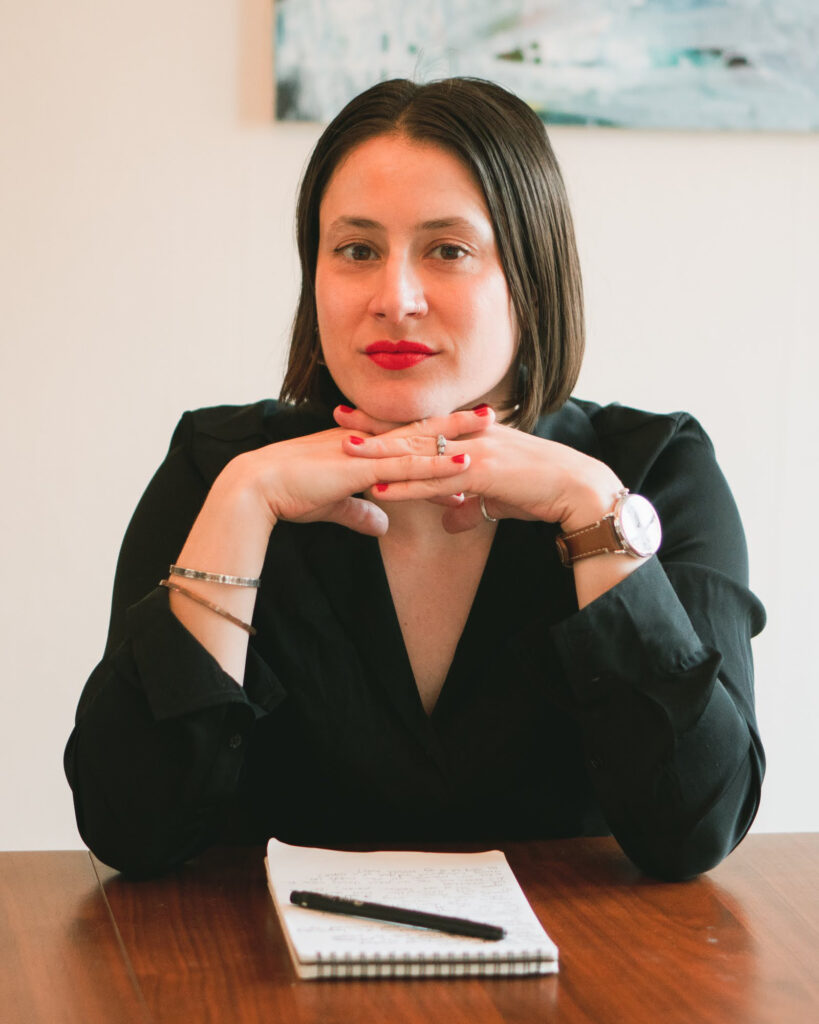
Rebecca Grant
Rebecca Grant is a freelance journalist based in Portland, Oregon, who covers reproductive rights, health, and justice. Her work has appeared in NPR, New York magazine, The Atlantic, VICE, The Nation, The Washington Post, Mother Jones, Marie Claire, Cosmopolitan, HuffPost, and The Guardian, among other publications. She has received grants and fellowships from the International Women’s Media Foundation, the International Reporting Project, The Fund for Investigative Journalists, and Type Investigations, reporting stories around the US and the world. Rebecca studied English and art history at Cornell University and served in the Peace Corps in Thailand. Before full-time freelancing, she worked at Washingtonian Magazine and wrote about startups in San Francisco. She is the author of Birth and Access.


