

Content created for The Oregonian
He worked in Portland as a Freightliner truck assembly lineman for 13 years, attending local writing workshops in the evenings as he completed his first novel. He sold his manuscript to W.W. Norton for just $6,000, and it later received Literary Arts’ Oregon Book Award for fiction in 1997.
The author? Chuck Palahniuk, who wrote Fight Club, the novel that inspired the now-famous movie with Edward Norton and Brad Pitt.
Palahniuk is just one of many writers in the Pacific Northwest who received financial support and recognition from one of the region’s oldest and most celebrated awards: the Oregon Book Awards. Founded in 1987, the Oregon Book Awards have honored more than 900 Oregon-based authors from famous names like Palahniuk, Barry Lopez, Ursula K. Le Guin, and Lidia Yuknavitch to lesser-known talents at every stage of their careers. The Oregon Book Awards & Fellowships program have given more than $1 million in fellowships and financial prizes to writers and publishers in the state, thanks to Literary Arts, a nonprofit organization dedicated to supporting writers and readers in the region.
“Any famous Oregon writer is going to have won an Oregon Book Award at some point,” explained Susan Moore, director of programs for writers at Literary Arts. “The awards emphasize Oregon’s amazing literary community.” This annual tradition has become not only a prestigious title to earn, with more than 200 books entered this year alone; it also serves as a foundational centerpiece around which Oregon’s writing community gathers each year.
A ceremony that celebrates Oregon’s literary voices
Each year, panels of out-of-state experts select five titles as finalists across seven genre categories: fiction, poetry, general and creative nonfiction, young adult and children’s literature, and, biennially, graphic literature. “This year’s Oregon Book Awards finalists are an incredible group of writers whose work reflects the richness and diversity of our region,” said Moore. “The finalists include debut authors as well as long-standing authors familiar to many readers. From personal explorations of identity and belonging to reimaginings of history and place, these literary works demonstrate the many ways Oregon’s authors engage with the questions and challenges of our time.”
The winners will be announced live at a ceremony held at Portland Center Stage at The Armory on April 20. This ticketed event is open to the public and presents a chance for anyone to celebrate this year’s winners while connecting with other book lovers and writers. “It’s a fun way to connect with the writing community in Oregon. You can cheer on your favorite writers, buy their books and mingle at the reception afterwards,” explained Moore.
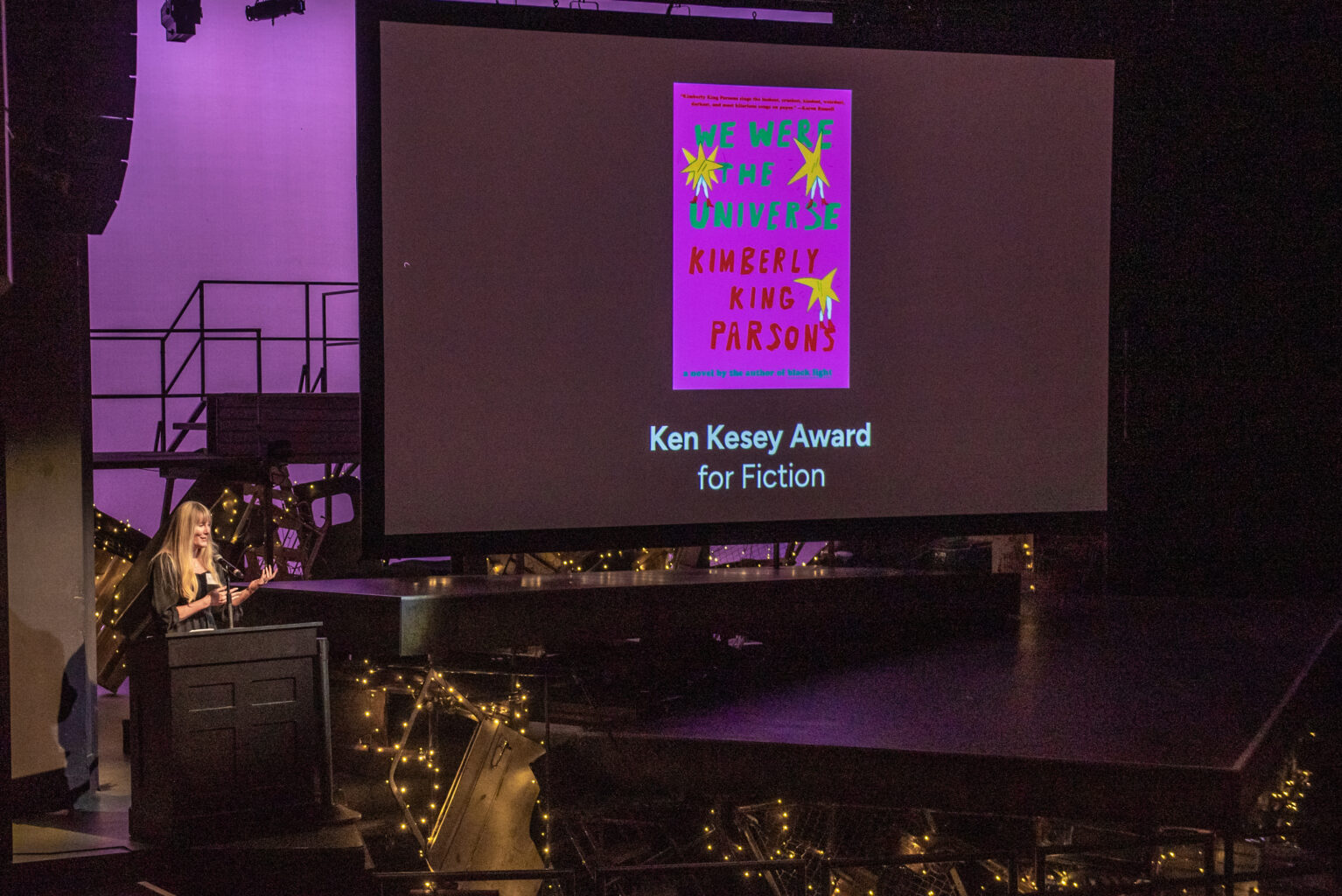
This year’s ceremony will be hosted by local writer Kimberly King Parsons. Parson’s short story collection Black Light: Stories was a National Book Award nominee in 2019 and her debut novel We Were the Universe won the Ken Kesey Award for Fiction from the Oregon Book Awards last year. “Winning felt like being claimed by a place. I’ve lived in Portland for almost 10 years now, and Oregon has become the landscape I write from, even when my work is often set in Texas. To have this community say yes, this book belongs here — that meant more than I expected,” she said. “Hosting feels like a chance to give something back. The Oregon Book Awards offer that confirmation — publicly, ceremonially, in a room full of people who care. Getting to stand onstage and celebrate the writers who are being recognized this year is incredibly moving.”
Supporting Oregon’s writing community
Literary Arts has been dedicated to the writers and readers of the Pacific Northwest for more than 40 years, and the Oregon Book Awards are just one of the organization’s many programs that help foster a robust literary culture in the region. Literary Arts also helps writers financially through the Oregon Literary Fellowships, which award grants to writers and publishers in all genres. Each year, Oregon Book Awards winners travel throughout the state to connect with readers in rural areas and collaborate with local partners, such as the Deschutes and Dallas public libraries. Beyond fellowships and awards, Literary Arts hosts events that help connect writers to their community through classes, readings, and free gatherings for all ages. The organization’s newly opened headquarters — a cozy bookstore, café and event space — has quickly become a favorite destination for readers and writers alike. But it’s not the only place to take in Literary Arts’ wide range of activity. Literary Arts’ events, from the Verselandia slam poetry competition to the annual Portland Book Festival and the celebrated Portland Arts & Lectures series, are held throughout downtown Portland.
As Parsons reflected, “Literary culture is so often centered on New York, and what a regional award does is insist that the rest of the country’s stories matter — that what’s happening in the Pacific Northwest, in small towns and big ones, in the specific light of this place, deserves attention on its own terms. It also creates community among writers who might otherwise feel isolated.”


