

We’re thrilled to introduce the 2026 Oregon Literary Fellowship recipients with individual profile features on our blog. Out-of-state judges spent several months evaluating the 400+ applications we received, and selected eight writers and two publishers to receive grants of $4,000 each. Literary Arts also awarded two Oregon Literary Career Fellowships of $10,000 each. The 2026 Fellowship recipients were recognized at the 2026 Oregon Book Awards Ceremony on April 20, and a public reading event featuring this year’s Fellows will take place on Monday, June 29 at the Literary Arts Bookstore.
Follow along as we roll out profiles of this year’s Fellows throughout the summer to learn more about some of the most exciting writers at work today in Oregon. And if you feel inspired after reading, consider applying for a 2027 Oregon Literary Fellowship yourself—applications are now open and will close on August 7, 2026.
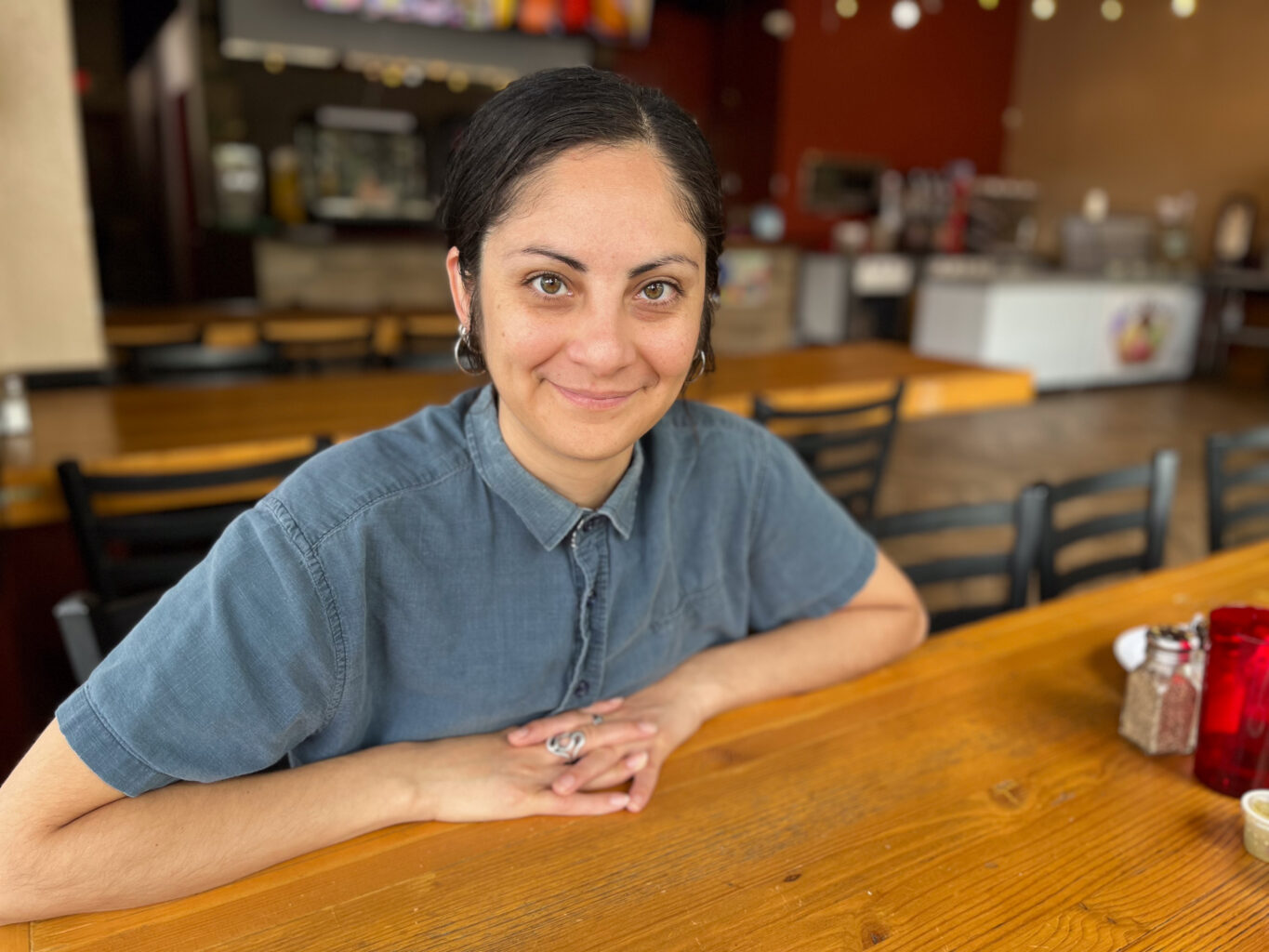
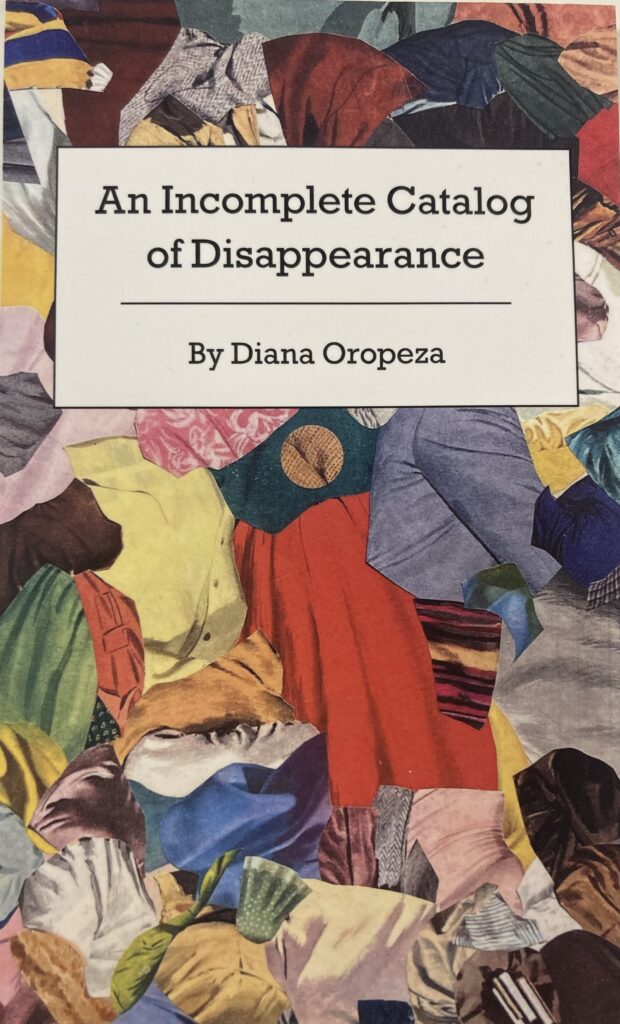
Diana Oropeza is a Portland-based writer working across poetry, nonfiction, and spoken word, and the recipient of a 2026 Oregon Literary Career Fellowship. Born in Lake Tahoe to Mexican immigrant parents, her work explores migration, translation, and layered narrative voice. She holds an MFA from PNCA at Willamette University, where her debut hybrid collection An Incomplete Catalog of Disappearance (Future Tense Books, 2024) won the Thesis Award, and a BA in Media Studies from UC Berkeley. She co-founded The Social Stomach, a spoken word and drums project that reimagines traditional poetry readings. Her writing appears in Willamette Magazine, River Styx, and Not My Style. She is currently researching lab rats and mazes for a new hybrid collection examining systems of control and observation.
Q & A WITH LITERARY ARTS
What excites you the most about receiving an Oregon Literary Fellowship?
I’m excited that my work has connected with readers, and I’m grateful for the chance to keep writing and developing new work. I’m also looking forward to the opportunities this might open up, like workshops, residencies, and field research.
How would you describe your writing process or creative practice?
My process usually begins with a small obsession around a subject. I follow it through different sources and materials, looking for language, patterns, and connections. I like to keep my notes in one place and distill that research into poems.
What authors or books have shaped you the most as a writer?
The books that have shaped my work most are Citizen by Claudia Rankine, The Taiga Syndrome by Cristina Rivera Garza, and When We Cease to Understand the World by Benjamin Labatut. I like the way these authors work through contradiction and instability.
Are there any Oregon writers you look to for motivation or inspiration?
Jay Ponteri, who taught me a lot about honesty in writing and process, and Dao Strom, whose experiments with voice are always expanding how I think about form.
What writing projects are you working on right now?
I’m working on a hybrid collection centered on lab rats and mazes that examines systems of control and observation. The work is still evolving, and I’m finding my way through its research.
Do you have any advice for future applicants?
Prioritize the writing sample, and be as direct as possible in your application.
Your book An Incomplete Catalog of Disappearance resists easy categorization with its swirl of poetic flash fiction, creative nonfiction, and ventures into non-linearity and the surreal. (In a blurb for the book, Vi Khi Nao describes you as pulling “a Jorge Luis Borges rabbit from a lexical hat.”) Can you talk a little about the particular magic you find in hybrid forms and what draws you to them in your writing?
I think what I like about hybrid forms is that they can hold complexity and multiplicity without needing to resolve anything. My writing usually moves through a variety of voices and perspectives, so hybridity has just naturally fit the way I work, not strictly as a poet, but as someone collecting fragments, like a detective or a magpie.
WRITING SAMPLE EXCERPT
For her application, Diana submitted excerpts from her book An Incomplete Catalog of Disappearance, published in 2024 by Portland-based indie press Future Tense Books. Two of these excerpts, ‘PENG’ and ‘NOTES’, are included below.
PENG
Our expedition leader vanished after he left a note saying he had gone to get water. We were a group of biochemists looking for a flower that had never been seen before, a flower known only as “the hidden heart,” a flower which supposedly had been born from the debris of nuclear testing and held the secrets to regeneration. We believed that if we could understand the flower’s chemical structure and biological links, we might be able to better understand how living organisms survive inhospitable conditions, and be able to extract resilience compounds from the plant. The only problem is that the closer we came to knowing the flower’s location, the further we got from understanding our own. Unfortunately, the flower was endemic to Wandering Lake, which is known for intermittently shifting its location, so it’s possible that our leader went looking for water that he remembered was there, not knowing that the water had legs and walked across the desert. I like to imagine that he found the hidden heart, and didn’t want to leave its side for fear he might not see it again. Maybe he’s there now, hoping the rest of us find it too, the flower that can grow out of war. Only the rest of us didn’t know if we should keep waiting until our expedition leader returned, but we also weren’t sure of the way forward, or home
NOTES
Don’t forget to include a list of everyone who ever went missing (see, public records, archives, oral histories, etc), and if possible, try to include the names of all those displaced, and if you can’t find names, include a list of those missing names as well. Include not just individuals but entire populations who have disappeared, who have been forcibly disappeared. Include all their names and not just a lump sum of their remains. Carve the names of the dead into stone and place these monuments in a field of true forget-me-nots. Collect anything that has been lost along the way. Remember who said “Remember what they did to us” and hear their story.
Remember to leave their families to their grief. Remember their stories too. Find a way to cope with the gravity of everything (it’s easier with others.) Keep a running list of all the self-destructing evidence. Swallow a tape recorder if you have to. Make a map so large we have to live there.
JUDGES’ CITATIONS
“Diana Oropeza’s luminous pieces form a tapestry of the missing. In place of absences—people, entire histories vanished in a moment—she supplies words. Sometimes they are light and playful and sometimes they hit like a truck. Rub your eyes. In her work, the missing are with us.” – Raghav Rao
“Diana Oropeza’s cinematic, visceral, and at times bewildering, prose poems are at once propulsive and contemplative. This is a writer whose sense of storytelling and music will be felt across genres. She builds a world full of surprise while retaining an unmistakable, cohesive voice. Writing to make sense of migration and fragmented histories, Oropeza unveils the strangeness of the invisible forces that shape behavior. I would follow this speaker anywhere.” – Patrycja Humienik
Applications for the 2027 Oregon Literary Fellowships are now open. The deadline to apply is Friday, August 7, 2026.


