

We’re thrilled to introduce the 2026 Oregon Literary Fellowship recipients with individual profile features on our blog. Out-of-state judges spent several months evaluating the 400+ applications we received, and selected eight writers and two publishers to receive grants of $4,000 each. Literary Arts also awarded two Oregon Literary Career Fellowships of $10,000 each. The 2026 Fellowship recipients were recognized at the 2026 Oregon Book Awards Ceremony on April 20, and a public reading event featuring this year’s Fellows will take place on Monday, June 29 at the Literary Arts Bookstore.
Follow along as we roll out profiles of this year’s Fellows throughout the summer to learn more about some of the most exciting writers at work today in Oregon. And if you feel inspired after reading, consider applying for a 2027 Oregon Literary Fellowship yourself—applications are now open and will close on August 7, 2026.
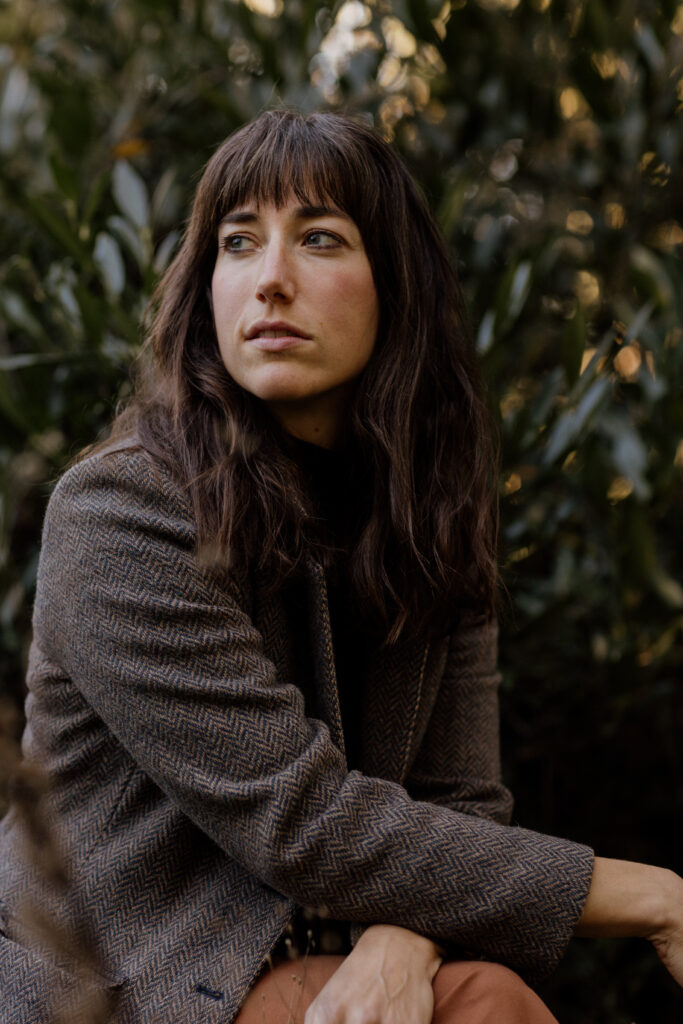
Devon Fredericksen is a queer author, essayist, and nature writer, and the recipient of a 2026 Oregon Literary Career Fellowship. Her work has appeared in The New York Times, The Atlantic, Guernica, High Country News, Hakai, bioGraphic, Yes!, Switchyard, Indian Country Today, Sonora Review, and other publications. Devon has written How to Camp in the Woods, among other books, and her writing has been supported by the Bread Loaf Environmental Writers’ Conference and highlighted twice in the Longreads Top 5 list. She is currently working on her book-in-progress, Only the Birds Know: A Love Story Between a People, a Place, and a Remarkable Duck (Pegasus, 2027).
Q & A WITH LITERARY ARTS
What excites you the most about receiving an Oregon Literary Fellowship?
As an admirer of many talented artists in the Oregon writing community, I feel so honored to have my work recognized alongside such incredible writing. It’s wonderful to be held by this supportive network, and I feel immense relief to now be able to devote more time to my book-in-progress. Cobbling together a freelance writing income is difficult, and the financial support removes an enormous weight. I’m so grateful.
How would you describe your writing process or creative practice?
It doesn’t happen every day, but when I can, I try to start each morning by reading a poem after waking. Then I read for a half hour while sipping tea, then write for a half hour. I read as much as I can, across disciplines, and though I’m a slow reader—wanting to savor sentences—I get through dozens of books a year just by plodding steadily along and learning what I can from each one. I also set firm boundaries around my Fridays, which I devote exclusively to writing. I’ve been doing that for six years, and it’s amazing to look back and see how much I’ve produced just by holding sacred one day a week.
What authors or books have shaped you the most as a writer?
In childhood, I gravitated toward tales of animal agency and collectivism, like Watership Down, The Trumpet of the Swan, and “The Rats of NIMH” series. In my teens, I read as much as I could about ecology and conservation, and was humbled by Edward O. Wilson’s work, which nudged me to consider how, in the context of earth’s complex web, even the life of an ant is worth a great deal. As an adult, I seek books by smart, attuned women writing about the natural world, such as Rachel Carson, Camille Dungy, Linda Hogan, Annie Dillard, and Margaret Renkl.
Are there any Oregon writers you look to for motivation or inspiration?
All my Oregon writer friends are brilliant, and at the terrible risk of forgetting someone, I’ll mention them here. To study the craft of exquisite nature writing, I turn to Erica Berry, Emma Marris, Ferris Jabr, Julia Rosen, Tove Danovich, Josephine Woolington, Katherine Cusumano, and Sarah Trent. When it comes to writing about politics, culture, and history with integrity and care, I look to these writers for inspiration: Sierra Crane Murdoch, Rebecca Claren, Emma Pattee, Melissa Maerz, Ciara O’Rourke, Kjerstin Johnson, Lydia Kiesling, and Maya Dusenbery. And I have the deepest respect for the excellent, intimate personal writing by friends such as Joy Sullivan, Jamie Cattanach, Danielle LaSusa, Brian Benson, and Carolina Pfister. Finally, I dearly love all things written by the late, great Brian Doyle, who had a knack for rendering every little thing in the world wondrous on the page.
The relational entanglements between humans and their environment is a consistent thread throughout your writing career so far, or as you wrote in your Artist Statement, how “landscapes shape not only who we are, but who we want to become.” What are some of the landscapes, or characters within them, that are shaping, or reshaping, your imagination these days?
For my book-in-progress, Only the Birds Know: A Love Story Between a People, a Place, and a Remarkable Duck, I weave in stories told from the perspectives of the ducks themselves. No species is a monolith, and I want my book to reflect this. Each duck has a distinct personality and a unique way of existing in the world, so by putting myself in their shoes (webbed feet?) and exploring their mini dramas and ecological dependencies, my hope is that a reader will better understand, on a visceral level, the entwinements between species and landscapes. It’s been an interesting thought experiment that allows me to see how connected I am to all the lives, human and non-human, with whom I come into contact.
What writing projects are you working on right now?
I’m working on my book-in-progress, Only the Birds Know, set in a remote Norwegian archipelago, just south of the Arctic Circle, where a continuum of mutualistic care has linked humans with wild ducks for centuries. The bookexplores the relationship between the common eider duck and the “bird keepers” of Vega, Norway, and how the larger forces threatening seabird populations have compromised an ancient way of life. After meeting Vibeke Steinsholm, a fifth-generation bird keeper, I lived on a remote island with her to better understand why people carry on this tradition, despite the pressures of modernization that nearly brought this island society to collapse at the end of the twentieth century. This intimate portrait tells the story of two women who see what happens when an elemental link is broken between humans and the natural world—and set out to repair that bond.
Do you have any advice for future applicants?
Apply! I’ve nearly talked myself out of applying to certain grants and fellowships because I worried I wasn’t qualified enough. Though my rejections outnumber my acceptances, the process of applying for grants can be clarifying for any writing project because it forces you to solidify a concept, which can help with the writing itself. And you never know—you might just get lucky enough to stand out!
WRITING SAMPLE EXCERPT
For her writing sample, Devon submitted an excerpt from her essay ‘To Steal a Whale Bone’, which was published online in Issue Four of Switchyard Magazine. Click here to read the full essay.
JUDGES’ CITATIONS
“Devon Fredericksen’s evocative prose insists on the vital relationality between the human and nonhuman living world. Her work incorporates and distills vital ecological knowledge without forsaking the vivid strangeness inherent to her subject matter. Inviting readers into the mystery of the natural world from which we are inseparable, Fredericksen makes the case for relationships beyond extraction, toward reciprocity and aliveness.” — Patrycja Humienik
“Devon Fredericksen’s writing hums with the urgency of other, not always human, lives. Her images are astoundingly clear and visceral; they part the flesh, contour the landscape, and bring the reader to the ocean’s ferocious edges. In dexterous prose that forgoes neither deep research nor genuine feeling, her work examines the moral quandaries and atavistic delights of living in community with animals. What does it mean to take from the world, and what does it mean to give back? Can ownership exist without conquest? Can animals die into a better future? These are not simple questions, but like the best nonfiction, Fredericksen’s work makes their asking tangible and concrete. Here is a writer who cuts to the bone.” — Thomas Dai
Applications for the 2027 Oregon Literary Fellowships are now open. The deadline to apply is Friday, August 7, 2026.


