

We’re thrilled to introduce the 2026 Oregon Literary Fellowship recipients with individual profile features on our blog. Out-of-state judges spent several months evaluating the 400+ applications we received, and selected eight writers and two publishers to receive grants of $4,000 each. Literary Arts also awarded two Oregon Literary Career Fellowships of $10,000 each. The 2026 Fellowship recipients were recognized at the 2026 Oregon Book Awards Ceremony on April 20 and a public reading event on June 29 at the Literary Arts Bookstore.
Follow along as we roll out profiles of this year’s Fellows throughout the summer to learn more about some of the most exciting writers at work today in Oregon. And if you feel inspired after reading, consider applying for a 2027 Oregon Literary Fellowship yourself—applications are now open and will close on August 7, 2026.
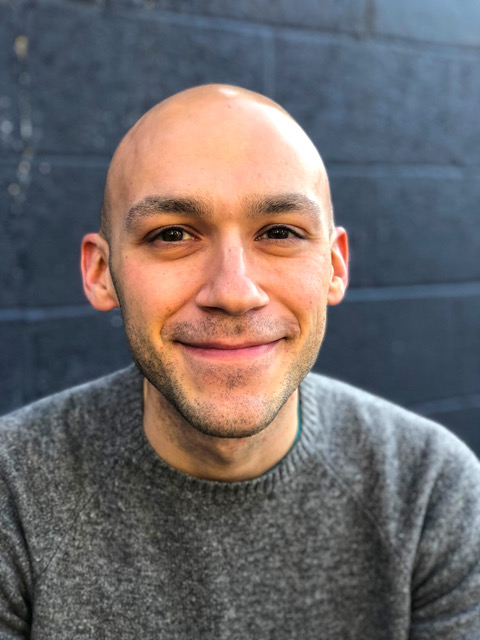
Jason Sepac is a 2026 Oregon Literary Fellow in Nonfiction and the winner of a Walt Morey Fellowship. Jason is an essayist and visual artist currently living in Beaverton, OR. His visual essays and nonfiction have appeared in Kenyon Review Online, The Iowa Review, Fourth Genre, The Normal School, The Pinch, and others. Jason is currently developing an essay collection that considers nostalgia and how it intersects with the image-based technology of particular eras (Polaroids, Super 8 Film, VHS, early cinema, etc.). He earned an MFA from Oregon State University, where he currently teaches creative writing.
Q & A WITH LITERARY ARTS
What excites you the most about receiving an Oregon Literary Fellowship?
It’s exciting that someone believes in your work—and not only that, they’re giving you money to do that (kind of weird) work. I’m incredibly grateful for the support, which will give me time to finish work on my current essay collection Let Me Show You Some Pictures and begin work on a new visual project (more about that below).
How would you describe your writing process or creative practice?
I think I’m most productive in a state of play—or in a play state-of-mind. From collaging (both words and images) to playing with my three-year-old daughter, I’m most drawn to activities that can sort of rewire my brain and prompt me to think of things in a new way. The process of actually getting words on a page usually starts in a little notebook and is a hodgepodge of short thoughts, drawings, and sometimes sketces of page layouts. From there, the work turns into something stretched across a text document, the Adobe suite, iPad sketches, a scanner is usually involved. It’s kind of messy.
What authors or books have shaped you the most as a writer?
I really adore the work of Elisa Gabbert. I teach her work a lot and come back to it again and again when I find myself stuck. The same goes for the visual work of Lauren Redniss. Her first book Century Girl blew my mind and totally changed the way I work. John Edgar Wideman’s prose is unlike anybody else I’ve ever read. His style and the way he blurs the lines of fiction and nonfiction is endless interesting to me. I first discovered Elena Passarello because of a handful of essays she wrote about Pittsburgh, which is my hometown and where I was living at the time. While the content is what drew me in, what she does with the essay form is what made me a fan. Years later I was lucky to have her as a teacher, mentor, colleague, and friend at Oregon State University.
Are there any Oregon writers you look to for motivation or inspiration?
Elena Passarello, who I mentioned above, was and is a major inspiration—both in her work and the way she builds community. Justin St. Germain (also faculty at OSU) has been an amazing teacher, mentor, and friend, as well. And I’ve been a fan of his work since reading his memoir, Son of a Gun. My fellow OSU alums in the Portland area, including Literary Arts Fellow Jeremy Klemin, are a huge support. I feel incredibly lucky to live close to so many of them.
What writing projects are you working on right now?
I’m starting work on a book-length essay about childhood myopia, parenthood, and macro photography. It’s in its very early stages but I’m looking forward to working on something that feels very much of my new life chapter as a parent.
Do you have any advice for future applicants?
Keep writing. Keep applying. Fly your freak flag high.
WRITING SAMPLE EXCERPT
JUDGE’S CITATION
“Jason Sepac’s graphic essays deftly combine image and text to resurrect our forgotten analog pleasures. Balancing emotional depth with technical acuity, his practice pays homage to creative mediums “on the brink of extinction,” asking what is lost when old ways of capturing experience are replaced by digital means of looking and preserving. His work is a camera obscura, a light-filled room, an archaeological dig into our technologically enhanced lives; his sentences are a humane testimony to both continuity and change. By pushing at the confines of genre, Sepac cleverly turns another old technology—the essay—into a vibrant, contemporary medium for introspection and inquiry.” — Thomas Dai


